Millstone FenKINDERDIJK & ZAANSE SCHANS GUIDE
Zuid-Holland & Noord-Holland, the Netherlands

Nineteen windmills that still pump water. Six more that still grind paint.

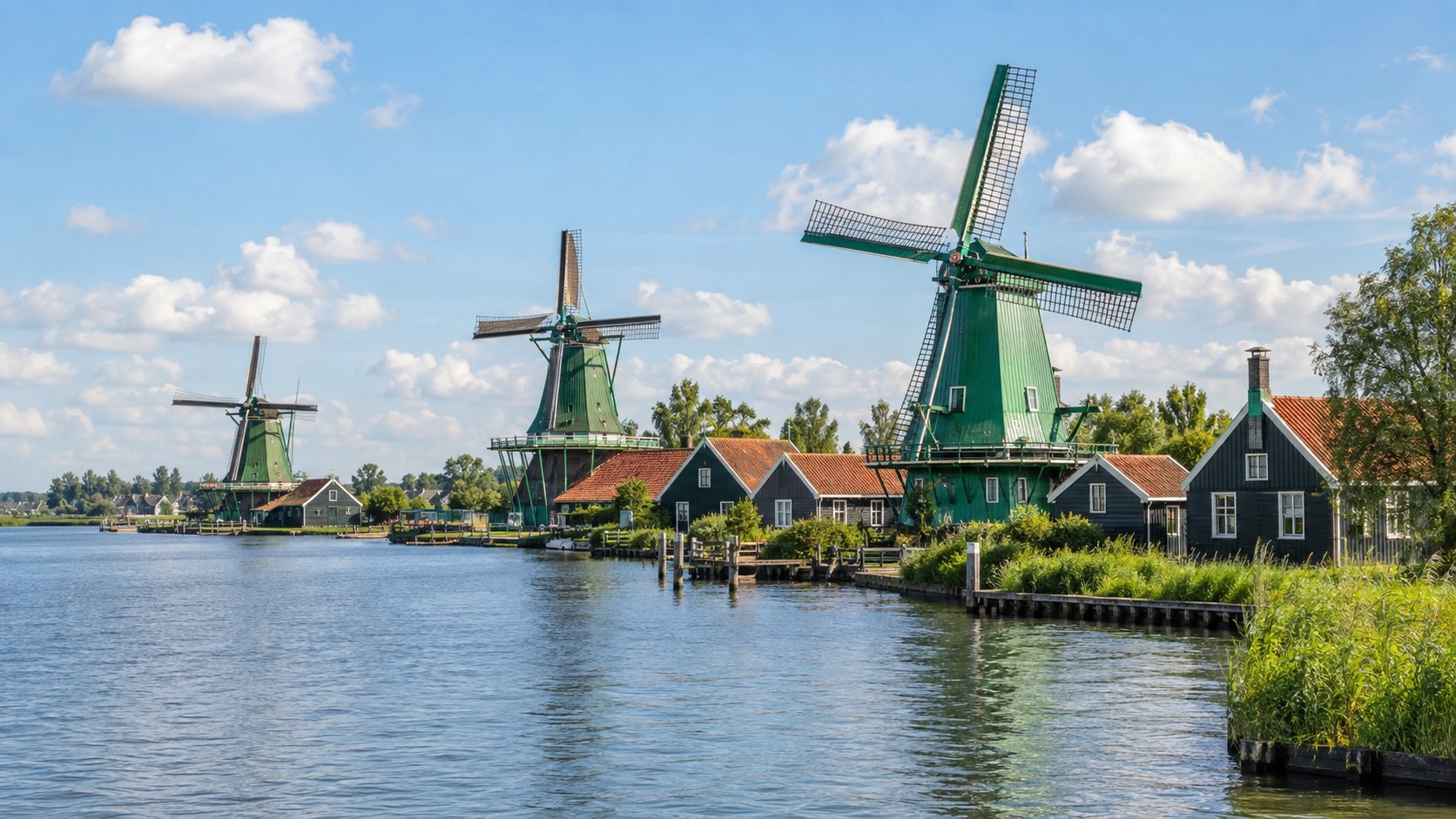
Kinderdijk and Zaanse Schans are both "windmill day trips from Amsterdam," and every itinerary lumps them together — but they're built for opposite purposes, sit in opposite directions, and reward completely different kinds of visit. This guide keeps them honestly separate, then tells you if you can actually do both in one day.

Reading A — ±0 m NAP
Reading B — −4.2 m NAP

Why the Netherlands needed thousands of these

The mills aren't decoration. They're the reason large parts of this country are dry at all.

About 26% of the Netherlands by area — and 21% of its population — lives below mean sea level, with the country's lowest point sitting 6.67 metres under it. Land that low doesn't drain on its own: rain and groundwater just sit there. From the late Middle Ages onward, the Dutch solution was the drainage mill — a windmill geared not to grind anything, but to turn a scoop wheel or an Archimedes' screw that lifts water out of a low polder and into a higher canal, one windmill-power's worth at a time.

Below sea level
26% of land area
Lowest point
−6.67 m
Kinderdijk built
1738–1740

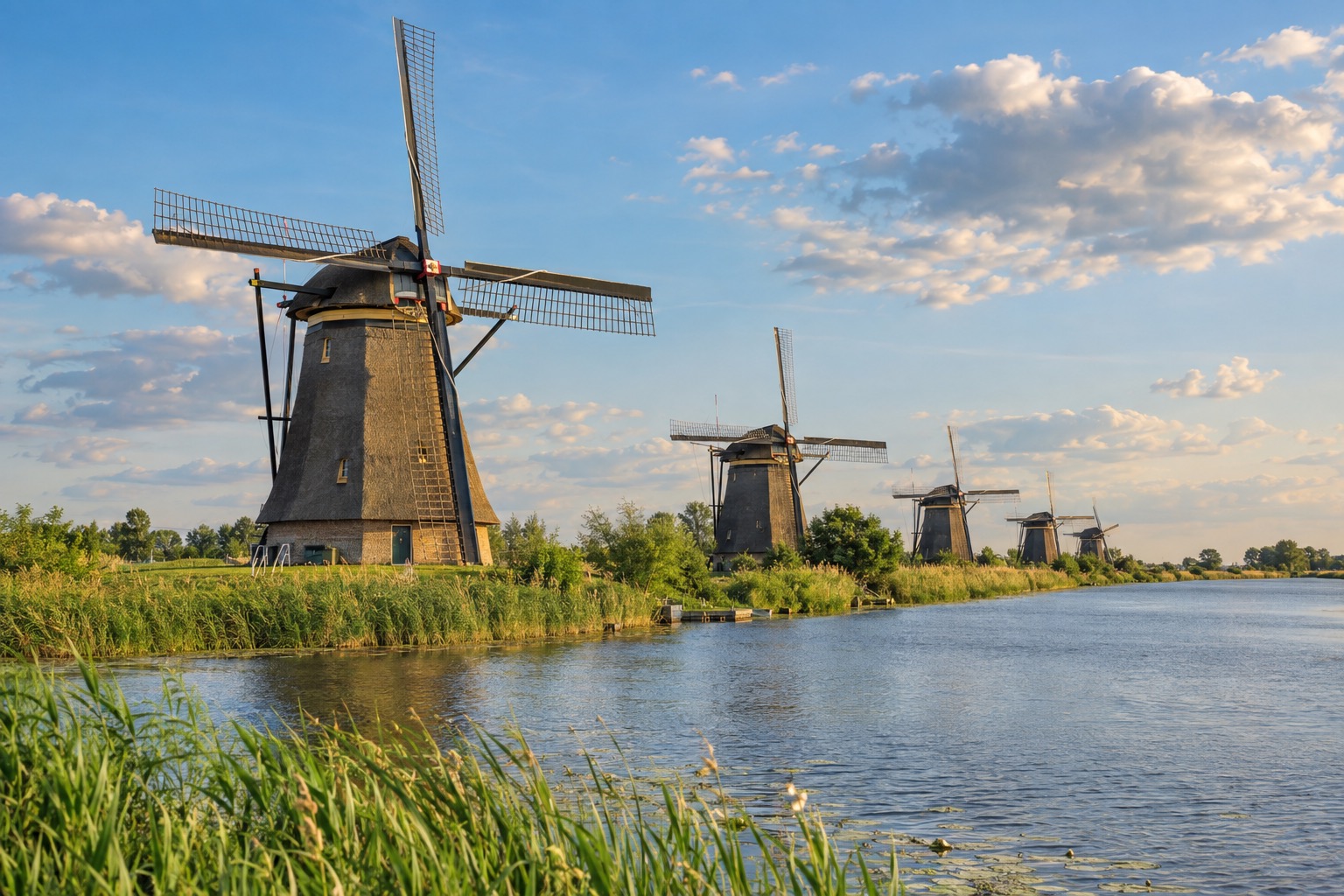
Kinderdijk is the single most complete surviving example of that system — not a reconstruction, but the actual machinery, still standing in its original arrangement at the point where the Lek and Noord rivers meet. That's the specific reason it was UNESCO-listed in 1997, ahead of the country's many other single windmills: it's a whole functioning network, not one preserved specimen.

Read the fuller polder and land-reclamation history →

Reading C — −6.67 m NAP

Can you actually do both in one day?

Technically yes. Comfortably, only if you commit to it early.

Zaanse Schans sits about 18 km north of Amsterdam Centraal — a 17-minute Sprinter train to Zaandijk Zaanse Schans station, plus a 15-minute walk, so roughly 30–32 minutes door to door. Kinderdijk sits in the opposite direction, close to Rotterdam rather than Amsterdam — the fastest public link is the WaterShuttle ferry from Rotterdam's Erasmus Bridge, about 30 minutes each way, running daily from 23 March to 25 October and weekends only after that.

The honest read

That's four separate legs of transit (Amsterdam↔Zaanse Schans, then Amsterdam↔Rotterdam↔Kinderdijk) squeezed around two sites that each deserve 2–3 hours. It's a long day, not a relaxed one, and it leaves no slack for a missed connection or a mill that's closed for maintenance. Most people who try to do both end up rushing one of them.

See the full planning page for a realistic single-site-per-day itinerary, or the tight combined-day version if you're committed to seeing both.